


Does Selling in Winter Make Sense? What Seasonal Inventory Trends Show
Spring gets most of the attention in real estate. More buyers are out looking, but that also means more sellers competing for the same attention.
Winter is different.
When fewer homes are listed for sale, the homes that are available tend to stand out more. And that reduced competition can be a meaningful advantage for sellers who are prepared and priced appropriately.
Selling in Winter: Why Fewer Listings Can Work in Your Favor
Timing alone doesn’t sell a home, but market conditions can influence how much competition a listing faces. One of the most consistent seasonal patterns in real estate is what happens to inventory as the year winds down.
Winter Is Typically a Lower-Inventory Season
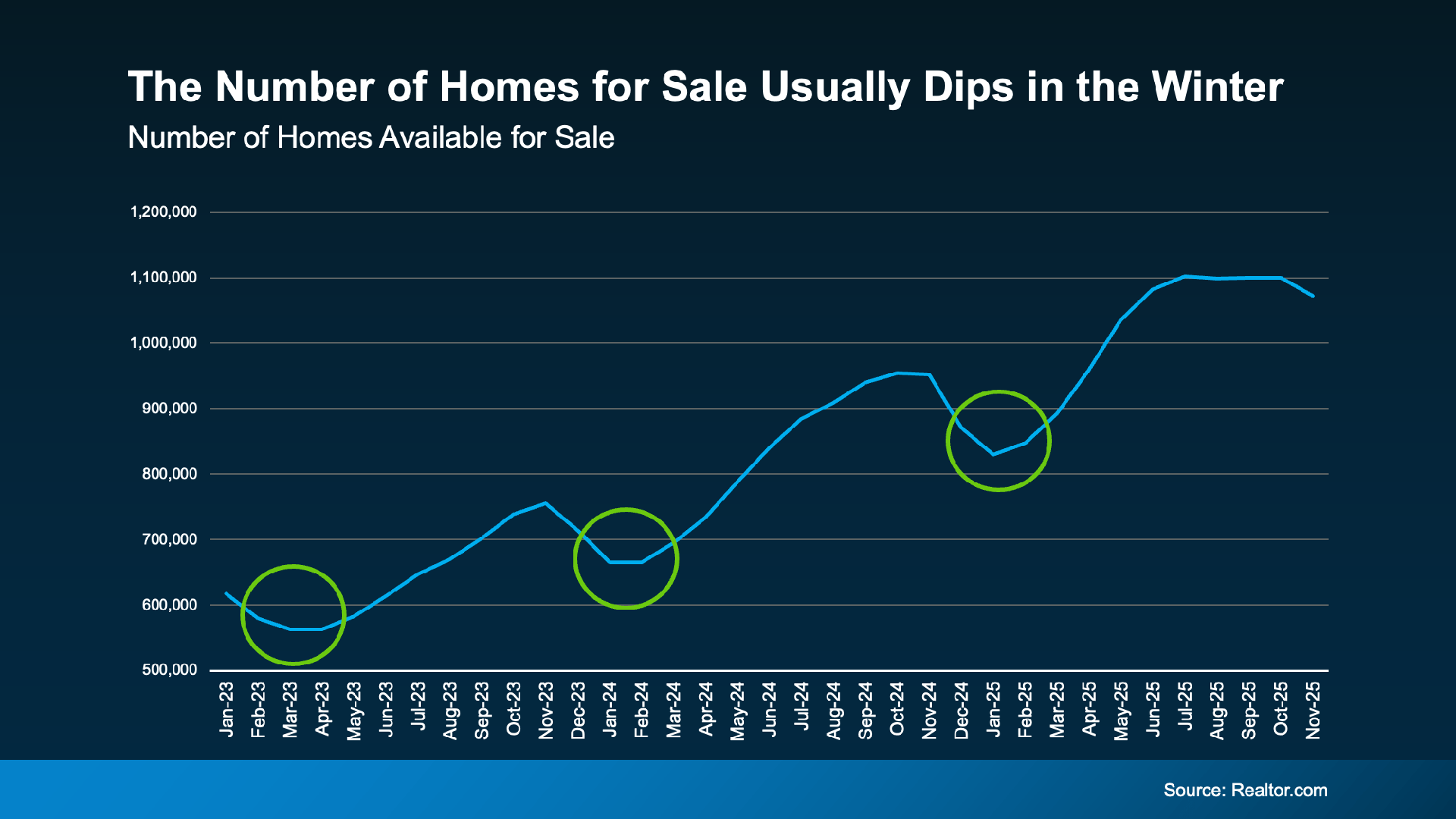
Historically, the number of homes for sale tends to decline during the winter months. This isn’t a one-time occurrence — it’s a pattern that shows up year after year.
According to Realtor.com, active housing inventory usually dips in the winter before rising again as spring approaches. That seasonal shift is visible across multiple years of data.
What Seasonal Inventory Trends Mean for Sellers
While inventory today is higher than it was during the most constrained years of the market, it remains below what many would consider a more typical pre-pandemic range. That range is roughly consistent with inventory levels seen between 2017 and 2019.
As we move deeper into the colder months, inventory often softens further. That doesn’t guarantee a sale, but it can reduce the number of competing listings buyers are comparing side by side.
For sellers who list during this quieter window, that can translate into clearer visibility — especially compared to the surge of new listings that often arrive in early spring.
Winter Buyers Tend to Be More Intentional
Buyer behavior also tends to shift this time of year. People actively shopping for homes in winter are often doing so because they need to move, not because they’re casually browsing.
Relocations, lease expirations, family changes, and job transitions don’t pause for the season.
As U.S. News explains:
“Buyers who are trudging through wintry weather often have a good reason for being out in the cold — they need to move… buyers who brave the elements are usually serious and able to make quick decisions.”
With fewer homes available, serious buyers may have a narrower set of options. When a home is priced realistically and prepared well, it has a better chance of standing out.
The Bigger Picture for Winter Home Sales
Winter doesn’t come with the same hype as spring — and that’s exactly why some sellers find it appealing.
Less competition, more intentional buyers, and predictable seasonal inventory patterns can create opportunities that are often overlooked.
That said, every market is local. Timing is only one piece of the puzzle, alongside pricing, condition, location, and personal goals.
Reach out for a local snapshot — no pressure, just real insights.
 All information provided is deemed reliable but is not guaranteed and should be independently verified. IDX information is provided exclusively for consumers' personal, non-commercial use, that it may not be used for any purpose other than to identify prospective properties consumers may be interested in purchasing, and that the data is deemed reliable but is not guaranteed accurate by RMLSTM.
The content relating to real estate for sale on this web site comes in part from the IDX program of the RMLSTM of Portland, Oregon. Real estate listings held by brokerage firms other than Equity Oregon Real Estate are marked with the RMLSTM logo, and detailed information about these properties includes the names of the listing brokers. Listing content is copyright © 2026 RMLSTM, Portland, Oregon.
This content last updated on September 21, 2026 1:28 PM UTC at 4 AM. Some properties which appear for sale on this web site may subsequently have sold or may no longer be available.
All information provided is deemed reliable but is not guaranteed and should be independently verified. IDX information is provided exclusively for consumers' personal, non-commercial use, that it may not be used for any purpose other than to identify prospective properties consumers may be interested in purchasing, and that the data is deemed reliable but is not guaranteed accurate by RMLSTM.
The content relating to real estate for sale on this web site comes in part from the IDX program of the RMLSTM of Portland, Oregon. Real estate listings held by brokerage firms other than Equity Oregon Real Estate are marked with the RMLSTM logo, and detailed information about these properties includes the names of the listing brokers. Listing content is copyright © 2026 RMLSTM, Portland, Oregon.
This content last updated on September 21, 2026 1:28 PM UTC at 4 AM. Some properties which appear for sale on this web site may subsequently have sold or may no longer be available.
