


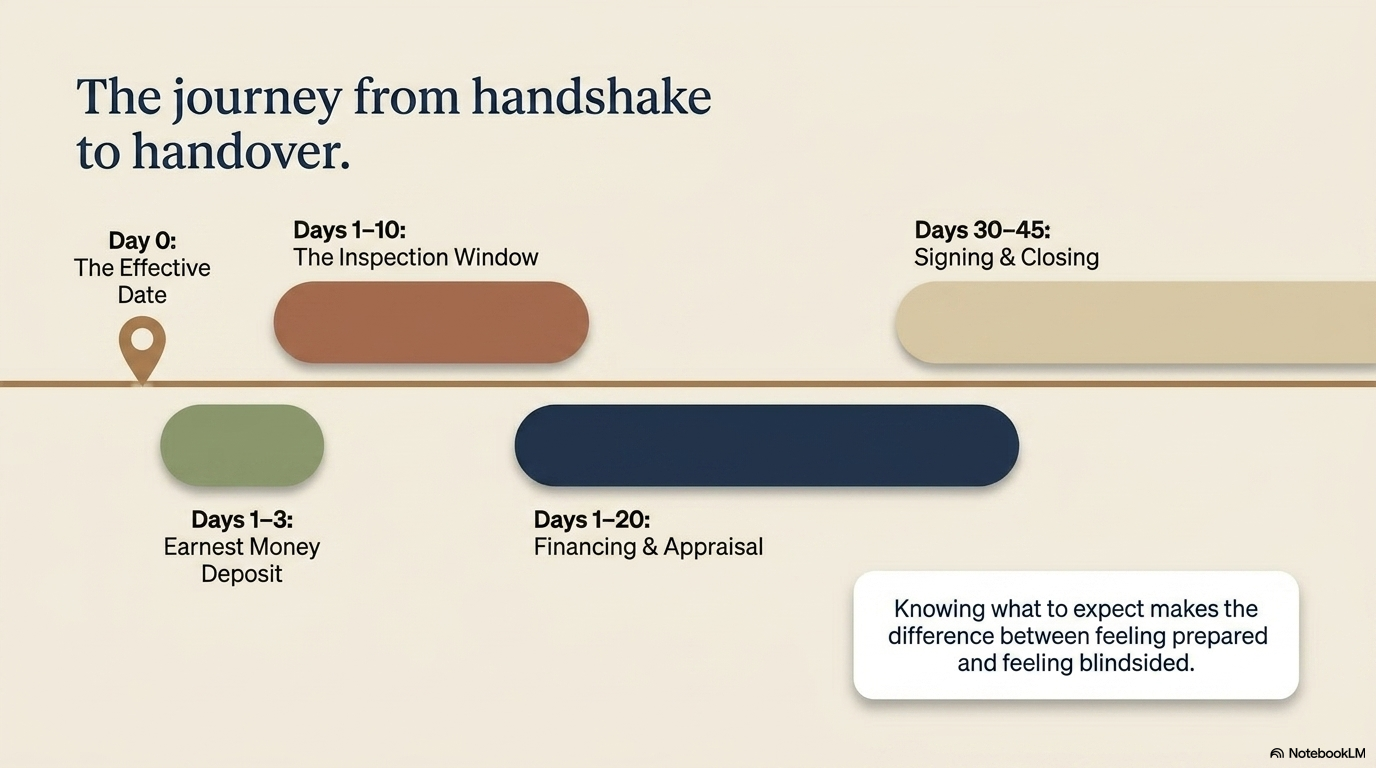
What happens after a seller accepts an offer in Oregon? Accepting an offer is a milestone — but it's the beginning of a process, not the end of one. In Oregon, the period between an accepted offer and closing typically involves earnest money, inspections, financing, an appraisal, a title review, and a final signing appointment before the deed records and funds are released. For most financed transactions, that process takes thirty to forty-five days. Knowing what to expect at each stage makes the difference between feeling prepared and feeling blindsided.
More Than a Handshake — What "Accepted" Actually Means
When a seller accepts an offer in Oregon, both parties have signed and delivered the sale agreement. That's the moment the contract becomes legally binding — what the Oregon sale agreement calls the Effective Date. From that point forward, a clear timeline of contingency deadlines begins, and time is of the essence.
Before we ever reach acceptance, we've already done the work of reviewing the offer thoroughly with our sellers. That means looking at the buyer's financial strength, confirming we've spoken with their lender and understand their financing, evaluating the earnest money amount, the offer price, and whether the buyer has asked for seller concessions and what those include. We look at every contingency — the inspections the buyer wants to conduct, how many days they've asked for, the appraisal contingency, and the loan contingency.
In some cases, we've also gone through one or more rounds of negotiation before arriving at a final, mutually accepted contract. Once that contract is signed and delivered by both parties, we build a timeline — a clear calendar of every deadline the buyer will need to meet and every milestone we'll be watching for. We share that timeline with our sellers, typically via email, so everyone is working from the same picture. We also make the introductions to the title company at this stage — sharing the names and contact information of the escrow officers our sellers will be hearing from, so that when emails and phone calls start coming in, there are no surprises.
The First Thing That Happens — Earnest Money
Under the Oregon sale agreement, the buyer's earnest money deposit is due within three business days of the Effective Date by default, paid directly to escrow. When the deposit is received, the title company confirms it — and our sellers receive that confirmation through a secure portal the title company provides. That same portal houses all the key transaction documents as they're delivered throughout the process: the earnest money receipt, the preliminary title report, and other items the seller will need to review. It's a useful resource, and we make sure our sellers know it's there and how to access it.
The earnest money signals that the buyer is serious. It's held in escrow throughout the transaction and applied toward the buyer's closing costs or down payment at closing. If the transaction falls apart due to a buyer contingency failing through no fault of the seller — the inspection contingency, for example, or the loan contingency — the deposit is returned to the buyer. If the buyer defaults without a valid contingency reason, the seller may be entitled to keep it. We explain this to our sellers early because it matters, especially later in the transaction when tension can run high.
The Inspection Period — The Most Nerve-Wracking Stage
For most sellers, the inspection period is the part of the transaction that creates the most anxiety — and for good reason. The default inspection period under the Oregon sale agreement is ten business days from the Effective Date. During that window, the buyer has the right to have the property inspected by licensed professionals of their choosing, at their own expense.
Inspections can cover a wide range, depending on what the buyer decides to order. A general home inspection is standard, but buyers may also request a sewer scope, a private well inspection, a septic evaluation, mold testing, or a radon test. We prepare our sellers for this by asking them to make access areas easy to reach — crawl spaces, electrical panels, the attic — and to leave the home in at minimum the same condition the buyer saw when they made their offer.
That last point matters more than sellers sometimes expect. The buyer will attend the inspection and will be inside the home for several hours, often looking more carefully than they did during their initial showing. A well-presented home during the inspection reinforces the buyer's confidence in their decision.
After the inspector's reports come in, the buyer has a decision to make. They can accept the property as-is, request repairs or credits using the Buyer's Repair Addendum, or — if they're sufficiently dissatisfied — deliver an unconditional disapproval and walk away, with their earnest money returned.
When a buyer submits a repair request, we review it carefully with our sellers. Part of that review sometimes includes getting estimates from our own trusted contractors to understand what a repair would actually cost and whether the buyer's estimate is reasonable. This is one of the places where our contractor relationships — with people who respond to our calls and are willing to help us think through a problem quickly — make a real difference in how a negotiation goes. From there, we either accept the request, counter it, or decline, and we work toward a resolution that's mutually satisfactory.
One thing sellers frequently don't hear until it's too late: under the Oregon sale agreement, any repairs agreed to must be completed by Oregon-licensed and bonded contractors unless the buyer specifically agrees otherwise in writing. This is true even for repairs that seem minor. Sellers who plan to handle repairs themselves to save money often discover mid-transaction that the buyer's agreement requires licensed work. This is one of the strongest reasons to address known repairs before you list — on your own schedule, with contractors of your choosing, without a deadline bearing down. If you're unsure what's worth fixing before you list, our post on what not to fix before selling is a good place to start.
Once repair negotiations are resolved and both parties sign off, the inspection contingency closes. That's a meaningful milestone. With it behind you, the chances of a successful close improve significantly.
The Financing and Appraisal Contingency
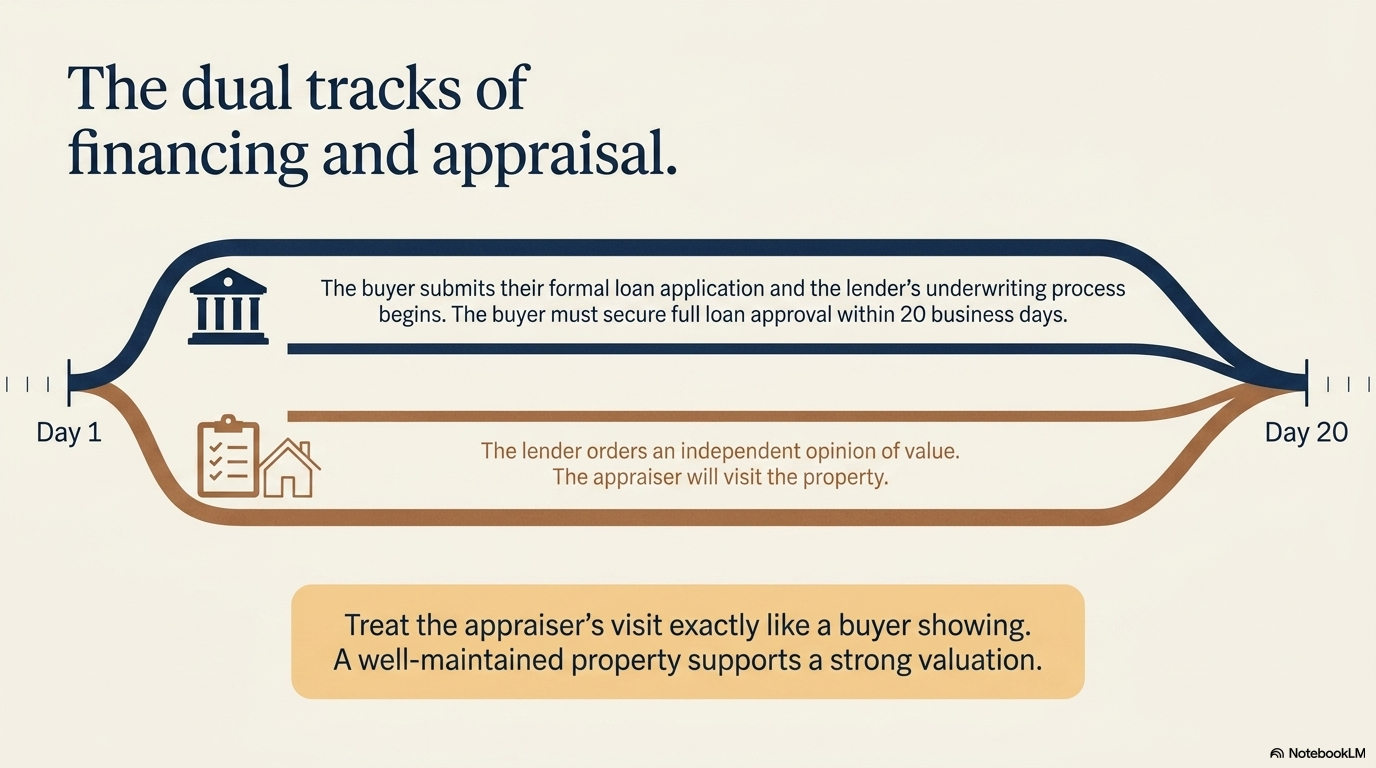
While the inspection is underway, the buyer's lender is also working. After the Effective Date, the buyer submits a formal loan application, the lender orders the appraisal, and the underwriting process begins. The default loan contingency deadline under the Oregon sale agreement is twenty business days from the Effective Date — meaning the buyer must have full loan approval in place within that window.
The appraisal is the piece sellers pay closest attention to, and with good reason. The lender's appraiser will reach out to us as the seller's representatives to schedule their visit — so we know it's coming and can make sure our sellers are prepared. Even though appraisers are objective and independent, we encourage sellers to have the home in top condition when the appraiser arrives. A well-maintained, well-presented property supports the strongest possible valuation.
The appraiser visits the property and issues an independent opinion of value. Most of the time, the appraisal comes in at or near the agreed purchase price, and the transaction moves forward without issue.
But occasionally — particularly when an offer comes in above asking price — the appraisal comes in lower than the purchase price. This is something we start thinking about long before the appraisal is even ordered. When we're reviewing an over-ask offer with our sellers, we're already talking to the buyer's lender and trying to get a clear sense of the buyer's financial strength — including whether they have the capacity to cover a potential appraisal gap if one were to occur. We have that conversation with our sellers openly, so that if a gap does happen, it doesn't feel like a crisis. If we have reason to believe the buyer is in a strong position, there's less stress on both sides — because we've already thought through what a resolution might look like.
When the appraisal does come in below the purchase price, the buyer is required to notify the seller promptly and then has two business days to either renegotiate the price, waive the appraisal contingency and proceed anyway, or terminate the transaction with their earnest money returned. An appraisal gap doesn't necessarily mean the deal is over — it means there's a conversation to have, and we help our sellers navigate it with clear information rather than panic.
Moving Toward Closing
Once the inspection contingency and financing contingency are both satisfied, the transaction shifts into its final phase. The lender completes underwriting, finalizes the loan documents, and sends them to the title company. The title company contacts the seller to schedule their signing appointment.
Sellers have a choice here: they can sign at the title company with the escrow officer present, or they can arrange for a notary to come to their home. We typically recommend signing at the title company whenever possible. The escrow officer has been working the file throughout the transaction and can answer questions on the spot. A notary can witness signatures but isn't in a position to speak to the specifics of the transaction.
One thing worth understanding about the timeline near closing: federal law requires that the buyer receive a Closing Disclosure at least three business days before they sign their loan documents. This rule applies to the buyer's side — it's their lender's obligation. Sellers receive a separate settlement statement from escrow. However, if a late change triggers a new three-day window on the buyer's side, it can push the closing date. This is rare, but it happens, and it's worth knowing about so a brief delay near the finish line doesn't feel alarming.
It's also worth noting that closing date changes happen more often than people expect — and most of the time, they're not a cause for concern. A transaction that's moving smoothly might close a day or two early. One working on a tight schedule might need a short extension. Whatever the reason, changing the closing date requires both parties' agreement and a written change to the contract — but in most cases, it's a routine adjustment, not a red flag.
Once the seller signs and the lender releases funds to the title company, the title company sends the proceeds to the county for recording. In Oregon, closing means the moment the deed records and funds are available to the seller. That's when the transaction is complete and the title has officially transferred.
One detail sellers sometimes overlook: unless a different arrangement is agreed to in writing, possession is delivered to the buyer by 5:00 PM on the day of closing. Sellers should plan accordingly — moving timelines, key handoff, and the condition of the property all need to be in order by that point.
What Sellers Are Often Surprised By
A few things come up in nearly every transaction that sellers didn't fully anticipate, even after we've walked through the process together.
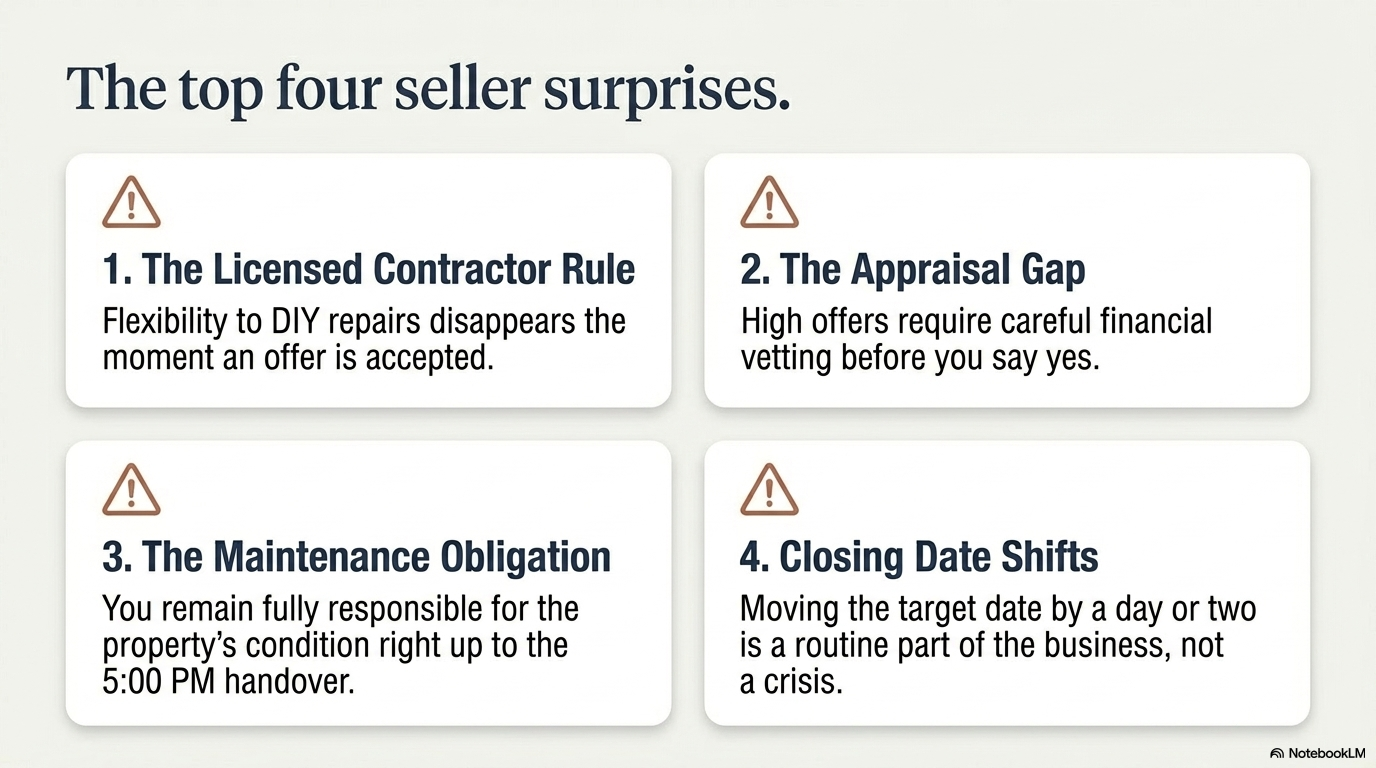
The licensed contractor requirement. Once a contract is accepted, any repairs agreed to during the inspection process must be completed by Oregon-licensed and bonded contractors — not the seller, a family member, or an unlicensed handyman — unless the buyer agrees otherwise in writing. Addressing known repairs before you list gives you control over the process. After an offer is accepted, that flexibility largely disappears.
The appraisal gap. Even experienced sellers are often caught off guard when an appraisal comes in below the agreed purchase price. If the offer came in above asking, it's a conversation worth having before acceptance — not after. We try to make sure our sellers are thinking about this possibility from the moment they're reviewing an offer.
The seller's maintenance obligation. The Oregon sale agreement requires sellers to maintain the property — electrical, heating, cooling, plumbing, irrigation, and the yard — in substantially its present condition through closing. The home the buyer walks into at possession should look the way it did when they made their offer.
Closing date changes are normal. Transactions rarely close on the exact date originally planned without any adjustments. A short extension or a slightly earlier close is common and usually nothing to worry about. What matters is that both parties agree in writing.
It's not over until it's over. We've seen transactions fall apart at every stage — during inspections, after an appraisal gap, and occasionally just days before closing. We work hard to get every transaction to the finish line, and we're honest with our sellers about where we are in the process and what risks remain. Getting through each milestone makes a successful close increasingly likely — but cautious optimism is the right posture until the deed records and the funds are available.
Frequently Asked Questions
What happens to the earnest money if the deal falls through?
It depends on why the deal fell through. If a buyer terminates the transaction because a contingency failed — the inspection, the appraisal, or the financing — and they did so within the allowed timeframe, the earnest money is returned to the buyer. If the buyer defaults without a valid contingency reason, the seller may be entitled to the deposit. Every situation is different, and we walk our sellers through the specifics of their contract before we ever get to that point.
How long does the closing process take in Oregon?
For financed transactions, the period from an accepted offer to closing typically runs thirty to forty-five days. Cash transactions can close faster since they skip the mortgage process entirely. The timeline in any given transaction depends on the specific contingency deadlines negotiated in the contract, how quickly the buyer's lender moves, and whether any issues arise along the way.
Do I need to be present at closing?
In Oregon, both parties typically sign their closing documents separately — sellers at the title company or with a notary, buyers at their own appointment. We recommend signing at the title company so any questions that come up can be answered by the escrow officer on the spot.
Knowing what's ahead makes the process easier to navigate.
The period between an accepted offer and closing involves a lot of moving pieces — and a lot of deadlines. Our job is to make sure our sellers understand what's happening at every stage, what's within their control and what isn't, and how to stay steady when something unexpected comes up.
If you're preparing to sell in the Willamette Valley and want to understand what this process would look like for your home and situation, we're happy to walk you through it. For a full overview of the seller's journey from start to finish, visit our First-Time Seller's Field Guide.
Reach out for a local snapshot — no pressure, just real insights.
Ruth & Frank Howard, Brokers | Your Howard Team | Equity Oregon Real Estate
Serving Canby, Oregon City, Wilsonville, Woodburn, Aurora, Hubbard, and surrounding Willamette Valley communities.
Local market knowledge across the Willamette Valley — from Canby and Oregon City to Salem, Keizer, Woodburn, Hubbard, and surrounding areas.
 All information provided is deemed reliable but is not guaranteed and should be independently verified. IDX information is provided exclusively for consumers' personal, non-commercial use, that it may not be used for any purpose other than to identify prospective properties consumers may be interested in purchasing, and that the data is deemed reliable but is not guaranteed accurate by RMLSTM.
The content relating to real estate for sale on this web site comes in part from the IDX program of the RMLSTM of Portland, Oregon. Real estate listings held by brokerage firms other than Equity Oregon Real Estate are marked with the RMLSTM logo, and detailed information about these properties includes the names of the listing brokers. Listing content is copyright © 2026 RMLSTM, Portland, Oregon.
This content last updated on September 21, 2026 1:28 PM UTC at 4 AM. Some properties which appear for sale on this web site may subsequently have sold or may no longer be available.
All information provided is deemed reliable but is not guaranteed and should be independently verified. IDX information is provided exclusively for consumers' personal, non-commercial use, that it may not be used for any purpose other than to identify prospective properties consumers may be interested in purchasing, and that the data is deemed reliable but is not guaranteed accurate by RMLSTM.
The content relating to real estate for sale on this web site comes in part from the IDX program of the RMLSTM of Portland, Oregon. Real estate listings held by brokerage firms other than Equity Oregon Real Estate are marked with the RMLSTM logo, and detailed information about these properties includes the names of the listing brokers. Listing content is copyright © 2026 RMLSTM, Portland, Oregon.
This content last updated on September 21, 2026 1:28 PM UTC at 4 AM. Some properties which appear for sale on this web site may subsequently have sold or may no longer be available.
