

Why a Well-Prepared Home Can Still Take Longer to Sell Right Now
Lately, a lot of sellers are asking the same question: What’s wrong with my house?
It’s especially frustrating when a home is well cared for, priced thoughtfully, and located in a good neighborhood — yet it’s taking longer to attract serious interest than expected. Twelve months ago, many of these same homes would have moved much faster. Today, the response can feel quieter, even when nothing obvious is “wrong.”
That disconnect is one of the defining features of today’s housing market.
The Market Is More Balanced — But That Doesn’t Mean It’s Fast
One of the biggest shifts over the past year is that the market has become more balanced. Buyers have more options than they did during the tightest years, and sellers are no longer competing in an environment where urgency alone drove decisions.
But balance doesn’t automatically mean speed.
When buyers have choices, they take more time. They compare homes more carefully. They’re more selective about condition, layout, and overall value. That doesn’t mean they aren’t interested — it means they’re no longer forced to decide quickly.
For sellers, this can feel confusing. A home that would have stood out immediately in a tighter market may now be evaluated alongside several alternatives. The bar hasn’t necessarily risen dramatically — but it has shifted.
Inventory Is Rebuilding Gradually, Not All at Once
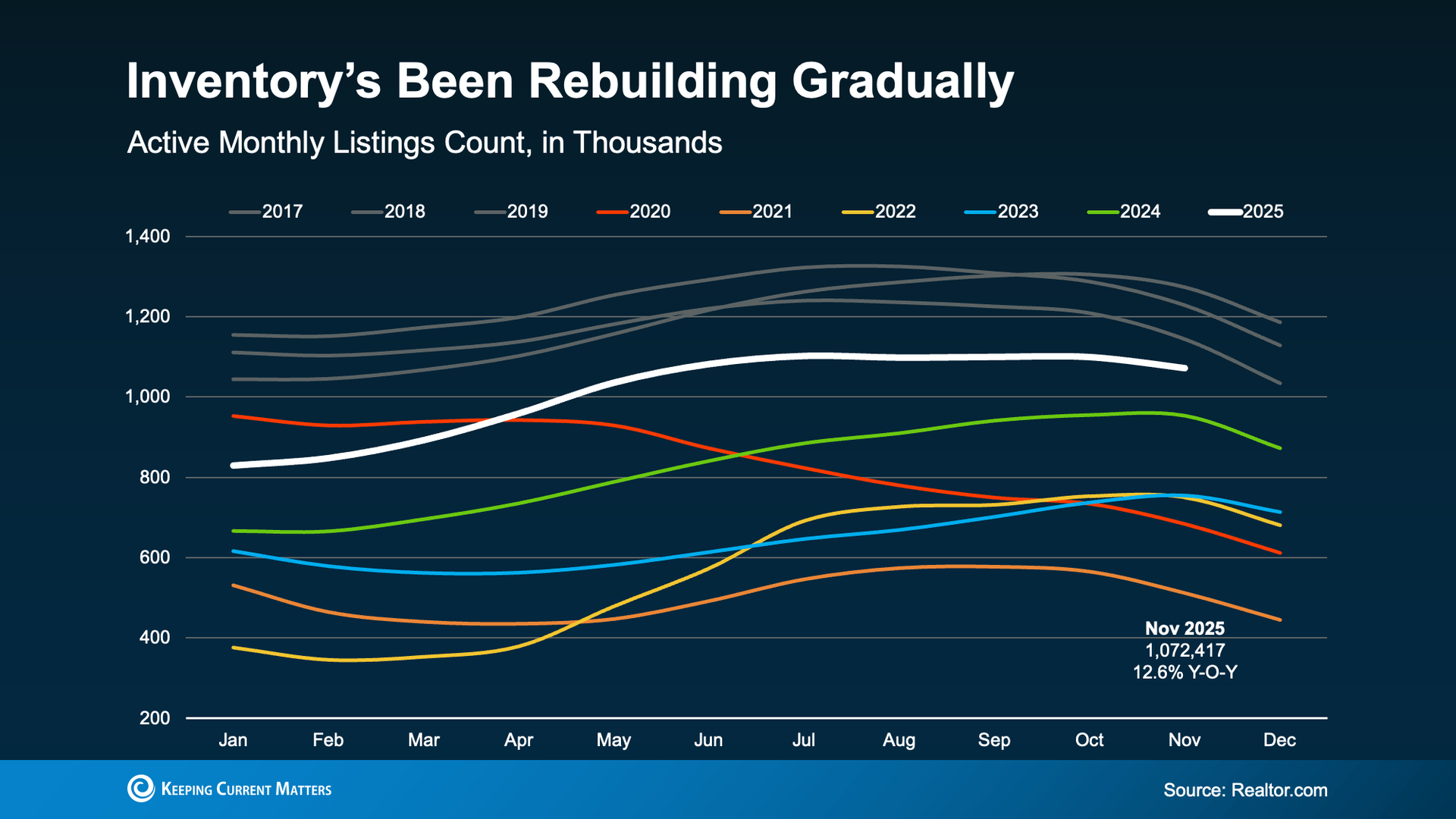
Recent national data helps explain why this feels so different.
Inventory hasn’t surged, but it has been rebuilding gradually. That slow, uneven increase is enough to change buyer behavior without creating a flood of listings. In other words, buyers feel less pressure — even though supply is still relatively limited by longer-term standards.
This gradual shift is a key reason why the market feels calmer and more deliberate than it did a year or two ago.
If you’d like more context on how this fits into the broader housing market, we break it down in our anchor article here: This Isn’t a Boom or a Bust — It’s a Reset .
Why This Can Be Hard on Sellers
In a more balanced market, homes aren’t just competing against what sold twelve months ago — they’re competing against what buyers can choose from right now.
That means:
- Buyers compare more actively
- Presentation and positioning matter more
- Timelines can stretch, even for solid homes
This doesn’t mean the market is broken. It means expectations are adjusting.
Many sellers are still anchored to memories of faster markets, while buyers are operating with a new sense of caution shaped by affordability, rates, and broader uncertainty. That gap in expectations is often what creates frustration.
The Takeaway
A home taking longer to sell today doesn’t automatically signal a pricing mistake or a problem with the property. In many cases, it reflects a market that’s recalibrating — one where buyers are thoughtful, options matter, and outcomes depend more on strategy than momentum.
This is exactly what we mean when we talk about a reset, not a downturn.
Reach out for a local snapshot — no pressure, just real insights.
 All information provided is deemed reliable but is not guaranteed and should be independently verified. IDX information is provided exclusively for consumers' personal, non-commercial use, that it may not be used for any purpose other than to identify prospective properties consumers may be interested in purchasing, and that the data is deemed reliable but is not guaranteed accurate by RMLSTM.
The content relating to real estate for sale on this web site comes in part from the IDX program of the RMLSTM of Portland, Oregon. Real estate listings held by brokerage firms other than Equity Oregon Real Estate are marked with the RMLSTM logo, and detailed information about these properties includes the names of the listing brokers. Listing content is copyright © 2026 RMLSTM, Portland, Oregon.
This content last updated on September 21, 2026 1:28 PM UTC at 4 AM. Some properties which appear for sale on this web site may subsequently have sold or may no longer be available.
All information provided is deemed reliable but is not guaranteed and should be independently verified. IDX information is provided exclusively for consumers' personal, non-commercial use, that it may not be used for any purpose other than to identify prospective properties consumers may be interested in purchasing, and that the data is deemed reliable but is not guaranteed accurate by RMLSTM.
The content relating to real estate for sale on this web site comes in part from the IDX program of the RMLSTM of Portland, Oregon. Real estate listings held by brokerage firms other than Equity Oregon Real Estate are marked with the RMLSTM logo, and detailed information about these properties includes the names of the listing brokers. Listing content is copyright © 2026 RMLSTM, Portland, Oregon.
This content last updated on September 21, 2026 1:28 PM UTC at 4 AM. Some properties which appear for sale on this web site may subsequently have sold or may no longer be available.
