

Why a Well-Priced Home Can Still Sit in Today’s Market
If you’re a seller watching a well-cared-for, well-located home take longer to sell than expected, you’re not alone — and it doesn’t automatically mean something is wrong. This is a common frustration right now, especially for homeowners who remember how quickly similar homes moved about 12 months ago. What’s changed isn’t just pricing or condition, but how buyers are making decisions in a market shaped by uncertainty, higher costs, and slower momentum.
Pricing Still Matters — But It’s No Longer the Only Gatekeeper
In past markets, strong pricing alone often solved everything. Today, even homes that are competitively priced and in good condition can take longer to attract committed buyers. That doesn’t mean price is irrelevant — it still matters a great deal — but it’s no longer the only factor driving speed.
Buyers are taking more time. They’re comparing more carefully. And they’re more cautious about committing, especially in certain price ranges where monthly payments feel heavier and financial flexibility feels tighter.
What’s Really Behind Today’s Inventory Growth
One of the biggest shifts in today’s market is where inventory growth is coming from. Nationally, it’s less about a flood of new listings and more about homes simply staying active longer.
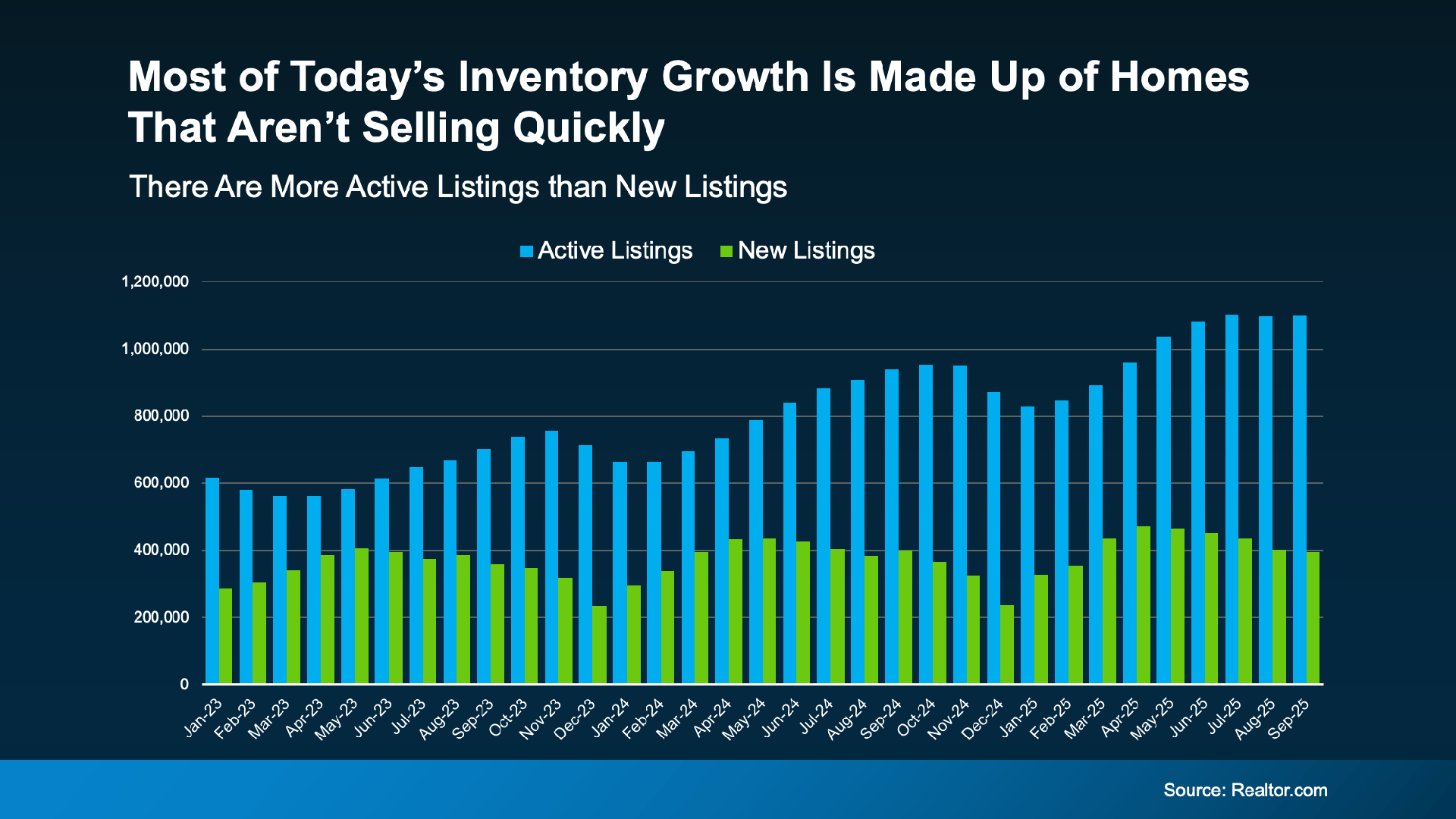
This distinction matters. When more homes remain on the market for longer periods, inventory appears to grow — even if the number of new listings hasn’t surged. In other words, today’s supply story is often about pace, not overpricing or poor quality.
Local Context Matters More Than Ever
Here in Oregon, and across much of the Willamette Valley, we’re seeing this dynamic play out in real time. Homes in good condition and established neighborhoods aren’t necessarily moving as quickly as they would have about 12 months ago, even when they’re competitively positioned. Similar conversations are happening throughout the greater Portland area as buyers take more time to weigh decisions.
Why 12 Months Ago Isn’t the Right Comparison
It’s natural to compare today’s experience to what the market felt like about 12 months ago. But nationally, homes were generally selling faster then than they are today. Over the past year, average time on market has stretched as buyer decision-making has slowed — even for homes that are well-priced and in good condition.
That shift reflects a broader change in buyer behavior, not a sudden problem with individual properties.
You’re Not the Only One Seeing This
These patterns aren’t isolated. Many agents across different markets are reporting similar dynamics: some homes move quickly, while others — even solid listings — take longer to gain traction. The difference often comes down to buyer confidence, financing comfort, and how much uncertainty people are willing to tolerate right now.
This unevenness can make the market feel confusing, especially when headlines suggest things are “improving” while individual experiences feel slower.
The Bottom Line
A home taking longer to sell in today’s market isn’t automatically a red flag. In many cases, it’s a reflection of a slower, more cautious environment where buyers are taking their time — not a sign that something is fundamentally wrong with the home.
Understanding the broader context helps take emotion out of the process and keeps expectations grounded in what’s actually happening.
Reach out for a local snapshot — no pressure, just real insights.
 All information provided is deemed reliable but is not guaranteed and should be independently verified. IDX information is provided exclusively for consumers' personal, non-commercial use, that it may not be used for any purpose other than to identify prospective properties consumers may be interested in purchasing, and that the data is deemed reliable but is not guaranteed accurate by RMLSTM.
The content relating to real estate for sale on this web site comes in part from the IDX program of the RMLSTM of Portland, Oregon. Real estate listings held by brokerage firms other than Equity Oregon Real Estate are marked with the RMLSTM logo, and detailed information about these properties includes the names of the listing brokers. Listing content is copyright © 2026 RMLSTM, Portland, Oregon.
This content last updated on September 21, 2026 1:28 PM UTC at 4 AM. Some properties which appear for sale on this web site may subsequently have sold or may no longer be available.
All information provided is deemed reliable but is not guaranteed and should be independently verified. IDX information is provided exclusively for consumers' personal, non-commercial use, that it may not be used for any purpose other than to identify prospective properties consumers may be interested in purchasing, and that the data is deemed reliable but is not guaranteed accurate by RMLSTM.
The content relating to real estate for sale on this web site comes in part from the IDX program of the RMLSTM of Portland, Oregon. Real estate listings held by brokerage firms other than Equity Oregon Real Estate are marked with the RMLSTM logo, and detailed information about these properties includes the names of the listing brokers. Listing content is copyright © 2026 RMLSTM, Portland, Oregon.
This content last updated on September 21, 2026 1:28 PM UTC at 4 AM. Some properties which appear for sale on this web site may subsequently have sold or may no longer be available.
